Luke Clarke

Functional Medicine Practitioner and Naturopath in Melbourne

Call US: 03 8820 0010
  • Home
  • About Me
  • What I Do
    • Functional Medicine
    • IBS (Irritable bowel syndrome) Treatment
    • Fibromyalgia Treatment
    • Gut Microbiome Testing
    • FODMAP
    • Adrenal Fatigue Treatment
    • Women’s Health
    • Men’s Health
    • Cleanse and Detox
    • Children’s Health
  • Blog
  • Women’s Health
  • Men’s Health
  • Children’s Health
  • Gut Health
    • How Do I Know if I Have Adrenal Fatigue?
    • What Are Functional Foods Examples?
    • What Are the Top Five Functional Foods?
    • What Foods Fight Inflammation?
    • The Health Benefits Of An Anti-Inflammatory Diet
    • What Is an Anti-Inflammatory Diet?
  • Contact

November 2, 2018 by Luke Leave a Comment

Handy Tips for Weight Management

 Handy Tips for Weight ManagementImage result for tips for weight loss

Are you trying to lose weight? If so, you’re not alone. A recent study found 42% of adults are currently trying to lose weight, while another 23% are fighting to maintain their weight. There’s a plethora of information available on weight management, and in truth, it requires a host of factors for success. However, this post outlines three handy tips research has shown to be integral to weight loss, and weight maintenance for long-term health and wellness.

Choose the Diet You’re Most Likely to Stick To

If you have tried to lose weight in the past you would know one of the biggest factors challenging weight loss is sticking to a diet. Over the years there has been debate over which dietary option is the most effective for weight loss: low fat or low carbohydrate? Intriguingly, and conveniently I might add, research is revealing that as long as you are on an isocaloric diet, with adequate protein, you can alter the ratios of the other macronutrients (fat or carbs) to achieve successful weight loss. When it comes to deciding which dietary approach is going to be more preferential over the other, research supports choosing a diet that is more congruent with your food preferences. So ask yourself, is your diet predominately fats (i.e. you can’t live without avocado), or carbohydrates (i.e. you couldn’t go a week without pasta)?

Self-Monitor For Success  

People who record what they’re eating, their physical activity and weigh themselves regularly have been shown to lose more weight than people who don’t .

What’s more, frequent self-monitoring has been shown to be a strong predictor of dietary change – which is super important if you hope to adopt healthier habits long-term. To be specific, when it comes to dietary self-monitoring, it involves recording the type and amount of foods and beverages consumed, along with their calorie content. The research recommends self-monitoring your dietary intake as well as physical activity daily, and weighing yourself once a week when you’re losing weight, then every day when you’re maintaining your weight. You may record information through a dedicated app, or using a paper diary. You don’t have to be 100% accurate with everything you record, it’s more about bringing your awareness to your eating and exercise habits – which in turn, assists with making healthy choices and adhering to your goals.

Rally Support!

Frequent contact with healthcare providers has been shown to be integral for producing meaningful weight loss (i.e. >5% of initial body weight), and ongoing interaction improves long-term outcomes too.

What constitutes as frequent contact you ask? There’s some debate around this, but during weight loss it ranges from weekly to fortnightly contact for the first 5 to 6 months, then followed by at least monthly contact for weight maintenance long-term. If you don’t have the time or finances to check in with a Practitioner weekly, or even fortnightly during the first 5 to 6 months, there are a couple of other options to ensure you benefit from ongoing support, such as:

  1. a) Locate a Practitioner offering group sessions, or join a local community weight loss or fitness group to attend alongside consultations with your Practitioner. If you schedule one face-to-face visit with your Practitioner monthly, along with a face-to-face group session between consultations – you will maintain the benefits of ongoing support and accountability fortnightly.
  2. b) Enquire whether your Practitioner offers electronic (i.e. email, messaging) check-ins.

Think Long-Term

Keep in mind, losing weight and maintaining losses is about changing your current habits and adopting a healthier lifestyle long-term. It’s about waking up each day, choosing to eat a meal your body will love and getting active, because that’s what you do – it’s part of your life. However, you can’t be expected to do it alone, these changes require ongoing support and encouragement. Hopefully these 3 handy tips will provide some insight and direction on your weight loss journey. All the best!

References on request

Filed Under: Uncategorized

November 2, 2018 by Luke Leave a Comment

Not all gut bacteria bounce back after antibiotics

Not all gut bacteria bounce back after antibiotics:
While almost all gut bacteria recover after exposure to antibiotics, six months afterward, the gut still lacks nine common beneficial bacterial species, according to new research.

The use of antibiotics has long been linked to changes in the composition and function of a person’s gut microbiota, or “gut bacteria.” The trillions of bacteria in the human gut affect our health in multiple ways, including having effects on immune functions and metabolism.

Research indicates that rich and diverse gut microbiota promote health by providing the human host with many competencies to prevent chronic diseases. In contrast, poor diversity of the gut ecosystem is a characteristic of chronic various diseases including obesity, diabetes, asthma, and gut inflammatory disorders.

Due to the general bacterial-killing nature of antibiotics, researchers have speculated that the repetitive use of antibiotics deprives people of a rich gut bacterial environment—and thus leads to adverse health effects.

Some bacteria still missing

Now, an international team of researchers from Denmark, China, and Germany has found that when young healthy men took three antibiotics for four days it caused an almost complete eradication of gut bacteria, followed by a gradual recovery of most bacterial species over a period of six months.

After the six months, however, the study participants were still missing nine of their common beneficial bacteria and a few new and potentially non-desirable bacteria had colonized the gut.

“We show that the gut bacterial community of healthy adults are resilient and able to recover after short-term simultaneous exposure to three different antibiotics. However, our findings also suggest that exposure to broad-spectrum antibiotics may dilute the diversity of the intestinal bacterial ecosystem. Antibiotics can be a blessing for preserving human health but should only be used based upon clear evidence for a bacterial cause of infection,” explains Oluf Pedersen, one of the study’s lead authors and a professor at the Novo Nordisk Foundation Center for Basic Metabolic Research.

The problem with antibiotic overexposure

The study was a four-day intervention with three broad-spectrum so-called “last-resort” antibiotics in 12 adult healthy men. The cocktail of three antibiotics was designed to mimic actual treatments in intensive care units.

The gut is a reservoir of hundreds of different bacterial species with antibiotic-resistant genes. This was confirmed in the study as these bacterial genes were the initiating force that led to the replenishment of bacteria in the gut.

Could the missing beneficial gut microbes in people who live in the Western world be due to an overuse of antibiotics?

“In this case, it is good that we can regenerate our gut microbiota, which is important for our general health. The concern, however, relates to the potentially permanent loss of beneficial bacteria after multiple exposures to antibiotics during our lifetime. There is evidence that Western populations have a considerably lower diversity of their gut microbiota that native people living in certain parts of Africa and Amazonas. One possible explanation for this may be the widespread use of antibiotics in treatment of infectious diseases,” says Pedersen.

The findings appears in the journal Nature Microbiology.

Source: University of Copenhagen

Filed Under: Uncategorized

October 1, 2018 by Luke Leave a Comment

The Many Personalities of Oestrogen – the Good, the Bad, the Beautiful

The Many Personalities of Oestrogen – the Good, the Bad, the Beautiful

Like many women, do you find yourself dreading ‘that time of the month’? Do the highs and lows of premenstrual syndrome (PMS), pelvic pain or heavy flow hamper normal functioning around the time of your period? Did you know that these symptoms (amongst others including hard-to-shift weight gain) may be related to imbalances in hormones such as oestrogen. This blog explores the important topic of oestrogen as this hormone can be amazingly beautiful in our bodies, but when out of balance, it may also turn ugly.

Oestrogen is predominately thought of as a female hormone; but just as women have small amounts of the male hormone, testosterone – men also need some oestrogen (albeit at lower levels) for optimal health.

Oestrogen wears many hats, and they’re not all related to reproduction!

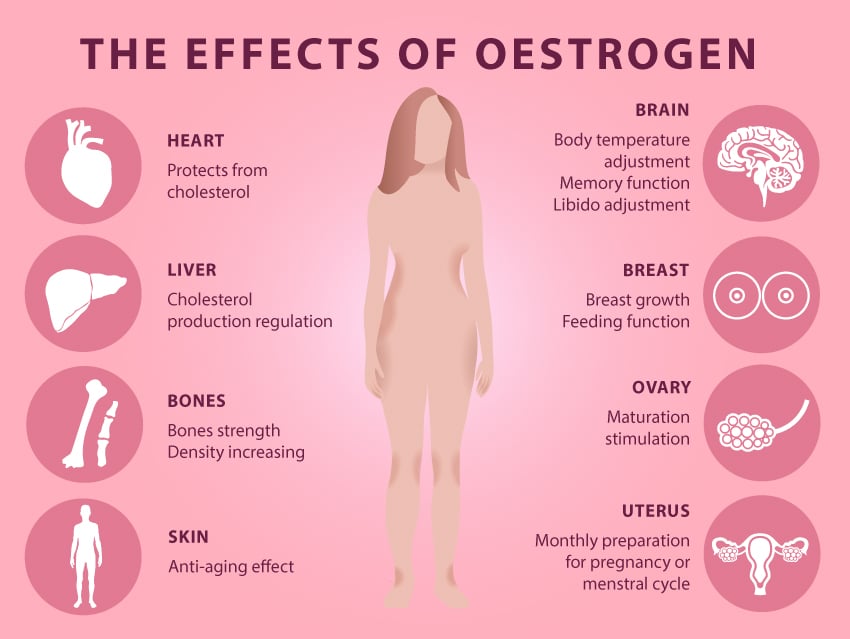
It also supports brain health. For example, it has been linked to slowing down the ravages of ageing and is protective against many neurological conditions such as Alzheimer’s disease, schizophrenia and depression. Oestrogen is also considered the beauty hormone; she plays a role in collagen production and moisture retention for supple skin, helping you looking more youthful! She is part of the reason why women retain hair on their heads, but have thinner hair elsewhere on the body. Oestrogen will also help bones remain strong by preventing calcium loss, and even supports healthy cholesterol metabolism (see Figure 1).

Figure 1: The Many Effects of Oestrogen.

All that said, oestrogen’s primary function is as a reproductive hormone. Levels begins to increase in young girls in puberty, around the time their periods begin. It is produced mainly by the ovaries, and will go on to shape and grow the breasts, the uterus and it’s lining (known as the endometrium) – essentially preparing the female body for reproduction. Interestingly, males also rely on oestrogen for the all-important task of creating healthy sperm!

Fun Fact: Did you know that during pregnancy, oestrogen levels are 1000 times higher than in non-pregnant women? This increase helps to expand the uterus to make space for the developing foetus and prepares the breasts for lactation.

Intracrinology – Intra What?

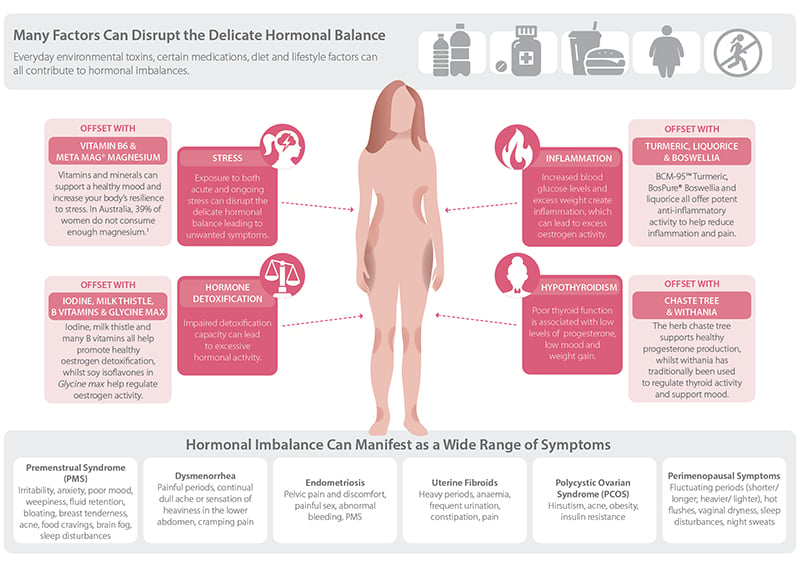
I know I mentioned earlier that oestrogen is produced primarily by the ovaries but this sneaky hormone can also be synthesised in other tissues in the body including the breast, the brain and even in body fat! Known as the science of intracrinology, the study of hormone levels in different tissues can give some fascinating insights into the activity of oestrogen throughout the body. As shown in Figure 2 below, many factors (such as increased production in various tissues and impaired detoxification) can disrupt the delicate balance of hormones and in some cases lead to having too much.

Excess oestrogen may result in symptoms such as period pain, heavy flow, PMS and even more serious presentations such as endometriosis, fibroids and breast cancer.

Figure 2: Many Factors Can Disrupt Hormonal Balance, But There Are Things You Can do to Correct This.

To give another example – if a woman is overweight, the extra fatty tissue can hold more oestrogen in the body, which can potentially lead to oestrogen excess and a worsening of hormonal symptoms.

Further, living in the modern world brings a constant exposure to environmental toxins such as plastics and other chemicals; those that have hormonal effects are known as endocrine disrupting chemicals (EDCs). EDCs such as bisphenol A (BPA) found in the lining of tins can actually increase oestrogen and change the way it works in the body.

Be Proactive About Keeping Oestrogen in Balance

If your pain, PMS or hormonal symptoms may be caused by too much oestrogen, then it’s time to take back control. There are many positive steps you can take towards rebalancing your hormones.

Many herbs and nutrients can be extremely beneficial in reigning in out-of-control hormones. Isoflavones from soy are used to support women’s healthy oestrogen levels by modulating oestrogen receptors (the binding sites on the cells). This means that soy can effectively instruct cells to promote the healthy actions of oestrogen and turn down the dial down on the more negative impacts. Other natural medicines such as magnesium, broccoli, rosemary, and BCM-95™ Turmeric all have positive effects on supporting healthy oestrogen metabolism, helping to restore a state of balance.

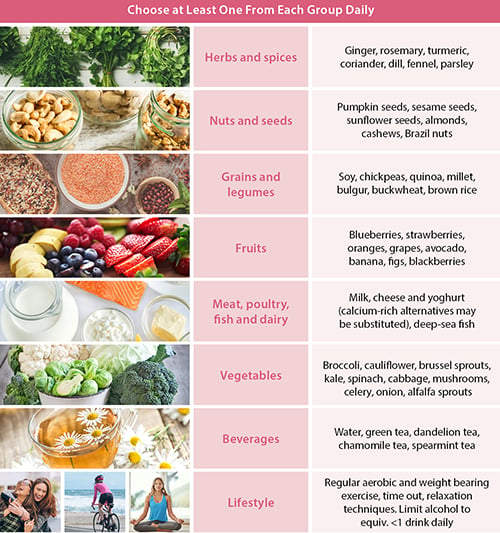
There are also some simple strategies you can adopt on a daily basis to place you on the path of healthy oestrogen balance. Follow the healthy hormone dietary and lifestyle tips in Figure 3 below. Other suggestions include not microwaving food in plastic containers, and swapping your plastic drinking bottles for glass or stainless steel – this can help reduce the impact of EDCs exposure.

Figure 3: Healthy Hormone Diet and Lifestyle Tips.

By gradually changing your habits you can reduce exposure to harmful EDCs, improve your oestrogen metabolism, and maintain the beneficial effects that the beautiful hormone called oestrogen may bring. If you would like more support in improving hormonal harmony and freeing yourself from the symptoms of oestrogen imbalance, speak to your local natural healthcare Practitioner today.


Filed Under: Uncategorized

October 1, 2018 by Luke 2 Comments

The Pillars of Health

Image result for wellness


The Pillars of Health

These steps are based on what I consider to be the 4 core pillars of health. These are the key areas that everyone, no matter who they are or what their health concern, must embrace in order to become their healthiest self.

The 4 pillars are:

Diet
Diet is arguably the single-most important factor that determines our health. The quality of the food we eat—and most importantly, the nutrients it contains—is what determines whether we simply survive, or thrive. Unfortunately, over 50 percent of the calories the average Australian consumes come from flour, sugar and industrial seed oils, foods that have almost none of the nutrients our bodies need to function properly.

The ideal human diet is one that emphasizes real, nutrient-filled, whole foods and eliminates or reduces the processed and refined “factory-foods” that have become the mainstay of the industrialized diet.

Movement
Humans are designed to be physically active. Yet in the modern world many of us sit the entire day at work and most of the evening too, as we browse Facebook, watch TV or check our email.
The key to overcoming our sedentary lifestyles is integrating more physical activity throughout our days, by sitting less, standing and walking more, performing our own chores, housework, and gardening, and finding opportunities to move whenever possible.

Sleep
Science has conclusively shown us that most people need 7 to 8 hours of sleep to function properly. Yet 1/3 of Australians are now getting fewer than 6 hours of sleep each night. This is nothing short of catastrophic, because sleep deprivation affects literally every cell and organ system in the body. Not getting enough sleep is associated with everything from obesity to diabetes to autoimmune disease to Alzheimer’s. The bottom line is that it’s impossible to reach your healthiest self if you don’t get enough sleep.

The keys to improving your sleep are making it a priority, reducing your exposure to artificial light at night, creating an environment conducive to sleep, and eating high quality foods.

Stress management
Chronic stress is often the elephant in the room: it’s a factor that profoundly affects our health, but that many of us simply ignore. This is unfortunate, because no matter what diet you follow, how much you exercise and what supplements you take, if you’re not managing your stress you will still be at risk for modern degenerative conditions like heart disease, diabetes, thyroid problems, and autoimmune disease.

Thankfully, stress management doesn’t have to be as hard as you might think. With the right tools and approach, it’s easy to incorporate into your routine, and if you’re like most people, you’ll see immediate and noticeable benefits.

These 4 pillars are the foundation of excellent health.

Filed Under: Uncategorized

October 1, 2018 by Luke Leave a Comment

8 of the most powerful probiotic-rich foods (that aren’t yogurt)

probiotic foods

8 of the most powerful probiotic-rich foods (that aren’t yogurt)

Many foods are beneficial for the gut, but some reign supreme in terms of their abundance of live microorganisms. Eating foods rich in probiotic microorganisms can help your digestive system function more efficiently and may contribute to a healthier immune system, along with many other health benefits.

Chances are, yogurt is the first food that comes to mind when you think of probiotics. While it certainly is an amazing source of good bacteria, it’s not the only one! There are a wide variety of other fermented, probiotic foods you can include in your diet to get the gut-boosting benefits you seek.

Kefir

Kefir is a cultured beverage similar to yogurt, but it’s thinner and drinkable. It can be made from many types of dairy or non-dairy milk, including cow, goat, sheep, or coconut. Unlike yogurt, which is fermented using heat, kefir is fermented at room temperature. Kefir is made by adding “kefir grains,” a microbial symbiotic mixture of yeasts and lactic acid bacteria, to milk. Kefir has a slightly acidic and tart flavor, and is full of helpful microbes; it can contain anywhere from 10 to 34 strains of probiotics and beneficial yeasts.

Kimchi

Kimchi is a traditional Korean dish of pickled vegetables, most commonly a mix of napa cabbage and Korean radishes and sometimes other veggies and spices. Kimchi is made by lacto-fermentation, a preservation process in which food is fermented by beneficial Lactobacillus bacteria.

First, the vegetables are soaked in a salty brine that kills off any harmful bacteria. Then, the probiotic Lactobacillus bacteria convert sugars in the vegetables into lactic acid – preserving them, increasing their shelf-life, and giving them that tangy flavor that people love. Kimchi is regarded as a rich source of beneficial bacteria. In fact, one of the bacterial species found in kimchi is named after it: Lactobacillus kimchii.

Sauerkraut

Like kimchi, sauerkraut is also shredded cabbage that has been fermented by lactic acid. Sauerkraut, however, usually ferments at a higher temperature than kimchi, resulting in a higher concentration of lactic acid bacteria and a bit of a tangier flavor. When you’re shopping for this delicious veggie at your local market, look for fresh sauerkraut in the refrigerated section. If the kraut has undergone pasteurization, all bacteria strains have been killed – even the probiotic ones. Like kimchi, sauerkraut and other fermented veggies contain several bacteria of the Lactobacillus genus, such as Lactobacillus plantarum, L. pentosus, L. brevis, L. acidophilus, L. fermentum, Leuconostoc fallax, and L. mesenteroides.

Kombucha

Kombucha has recently become very popular in health-food scene as both a delicious and probiotic-packed beverage. Kombucha is a fermented tea, and most types also include the addition of a little sugar or fruit juice. Think of kombucha as a fizzy, healthier alternative to soda, as it has far fewer calories and less added sugar.

Kombucha is created through fermentation with what is known as a “SCOBY,” which is a symbiotic colony of bacteria and yeast. During the fermentation process, kombucha obtains a small amount of alcohol, so consult with your doctor about whether it’s safe for you to drink during pregnancy.

Olives

It’s easy to forget that these beloved, salty snacks are one of the most commonly eaten and widely fermented foods in the world. In addition to their antioxidant properties and healthy unsaturated fats, olives also give you a burst of beneficial bacteria. After olives are placed in brine, Lactobacillus bacteria cause them to ferment. After the fermentation process, Lactobacillus plantarum and Lactobacillus pentosus are the predominant species of probiotic bacteria found in olives.

Miso

Miso, a staple of Japanese cuisine, is yet another probiotic powerhouse. It is made from soybeans, water, and koji (cooked grains or soybeans inoculated with a mold, Aspergillus oryzae, which begins the fermentation process). As the koji enzymes break down the soybeans, the simple sugars created become fodder for bacteria such as Pediococcus halophilus and Lactobacillus delbrueckii. These bacteria break down the sugar into lactic acids that contribute to the flavor of the miso. There are many varieties of miso, and each variety uniquely reflects the microorganisms native to the area in which it is made. This gives the miso an individualized flavor and sometimes a unique appearance. Depending on the type of miso, the aging process may range between two months and three years.

Before you go off to make your own miso soup, there is one important thing to note: the probiotic bacteria in miso can be killed at high heat. You can avoid destroying the beneficial bacteria by adding miso to foods when their temperatures are below boiling.

Tempeh

Tempeh, a fermented soybean-based product that originates from Indonesia, has gained popularity all over the world. Not only is it a source of probiotics – it is also a rich source of protein, making it an excellent meat substitute for vegetarians and omnivores, alike. This cake-like product is typically made of fermented soybeans and has an earthy, nutty flavor. During the fermentation process, the bacteria also produce vitamin B12, a nutrient that soybeans do not naturally contain. Tempeh is also a rich source of other B vitamins, such as vitamin B6 and folic acid.

Coconut yogurt

If you have to limit or eliminate dairy in your diet, coconut yogurt can be an awesome way to get probiotics in the same creamy and delicious way as the typical dairy variety. Coconut yogurt can be an especially powerful source of probiotics and has an extra tangy, effervescent effect. Add coconut yogurt to smoothies, or enjoy a few spoonfuls with nut butter and berries – the options are endless.

Want to know more about your own gut microbiome? You and your healthcare provider can use uBiome’s SmartGut testing to find out how your gut microbiome is functioning and to monitor changes in your gut flora over time.

Filed Under: Uncategorized

  • « Previous Page
  • 1
  • …
  • 18
  • 19
  • 20
  • 21
  • 22
  • …
  • 65
  • Next Page »

Contact Us

Luke Clarke

Phone: (03) 8820 0010

Clinic Address:
1 Ward Street
Ashburton VIC 3147, Australia
(Parking out the back – use laneway on left)

Menu

  • Home
  • About Me
  • What I Do
    • Functional Medicine
    • IBS (Irritable bowel syndrome) Treatment
    • Fibromyalgia Treatment
    • Gut Microbiome Testing
    • FODMAP
    • Adrenal Fatigue Treatment
    • Women’s Health
    • Men’s Health
  • Children’s Health
  • Blog
  • Contact

Sitemap

Sitemap
Copyright © 2025 · Luke Clarke