Luke Clarke

Functional Medicine Practitioner and Naturopath in Melbourne

Call US: 03 8820 0010
  • Home
  • About Me
  • What I Do
    • Functional Medicine
    • IBS (Irritable bowel syndrome) Treatment
    • Fibromyalgia Treatment
    • Gut Microbiome Testing
    • FODMAP
    • Adrenal Fatigue Treatment
    • Women’s Health
    • Men’s Health
    • Cleanse and Detox
    • Children’s Health
  • Blog
  • Women’s Health
  • Men’s Health
  • Children’s Health
  • Gut Health
    • How Do I Know if I Have Adrenal Fatigue?
    • What Are Functional Foods Examples?
    • What Are the Top Five Functional Foods?
    • What Foods Fight Inflammation?
    • The Health Benefits Of An Anti-Inflammatory Diet
    • What Is an Anti-Inflammatory Diet?
  • Contact

September 3, 2018 by Luke Leave a Comment

Why Buy Organic?

More people are paying close attention to the food they eat; reading labels with eagle eyes and looking for the term ‘organic’, but is the desire for organic produce just driven by clever marketing? What is it about knowing food is organic that buyers feel gives them a health advantage? And is buying organic worth the price tag?

If you look up a definition of ‘organic farming’ it refers to food produced without the use of chemical fertilisers, pesticides, or any other artificial chemicals. That’s the real reason that many consumers choose to invest in organic – because they are choosing to avoid the chemical cocktail that ‘conventionally’ grown produce comes with – namely pesticides and fertilisers.

According to Food Standards Australia New Zealand (FSANZ), chemical residues on foods have a maximum limit to be legally sold; a limit that applies for both imported and locally grown produce. However, for organic food advocates – any chemical contamination is too much, and they are prepared to pay for what they consider to be cleaner, safer options.

If Agricultural Chemicals Were Toxic, No One Would Allow Their Use, Right?

Here’s the thing – a number of researchers have been investigating this very question, and others, with sobering results. You see, while many of these agricultural chemicals were tested once upon a time and considered ‘non-toxic’, because they’d be used at levels far below a toxic dose (so they must be safe). However, no one at that time was measuring how really tiny amounts of the same chemicals might disrupt our delicate hormonal system. Nor was anyone looking at what the effect would be if you mix up miniscule amounts of a number of these same chemicals into the equivalent of the aforementioned ‘chemical cocktail’ – how might that impact human health over months or years, or the next generation, or the next? And could really subtle effects of these same chemicals occur before we are even born, impacting how our cells might function in years to come? How vulnerable are our developing children? These questions and more are beginning to be answered – and the results are not promising.

In a nutshell, many of the chemicals used in agriculture are now termed the somewhat ominous ‘endocrine disrupting chemicals’ or EDCs. These are unfortunately ubiquitous in our environment now, and many considered ‘persistent organic pollutants’ or POPS, meaning they don’t break down and disappear but remain in the environment whether we like it or not. High levels of these EDCs in women have been linked to abnormal puberty, irregular menstrual cycles, reduced fertility (or infertility), polycystic ovarian syndrome, endometriosis and fibroids. Nevertheless, the point remains that we simply don’t know yet what all the long-term effects are, and this makes many people choose to do what they can now, rather than wait – one of these choices is to eat organically to try to limit their chemical exposure.

What to Look for When Buying Organic

In Australia there are currently seven organic certifiers accredited by the Department of Agriculture, Fisheries and Forestry (DAFF). There is also the Organic Growers of Australia (OGA), who are accredited by the International Organic Accreditation Service rather than DAFF. However OGA will no longer be certifying from 30th June 2018, with producers requested to transition over to Australian Certified Organic instead. As there may still be some OGA certified products available for a short while, their logo has been included in Figure 1.

According to the National Association for Sustainable Agriculture, Australia (NASAA) it is important to look for ‘certified organic’ on labels as the term organic isn’t actually protected and many companies leverage the terms ‘natural, green’ and/or ‘organic’ to catch consumers eyes and entice them to buy – so it’s wise to be a little suspicious.

Look for the term ‘certified organic’ on your items, as this can only be used by those who are actually producing what you are really looking for.
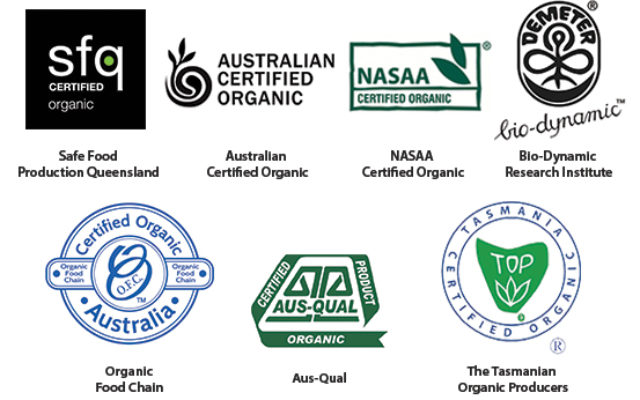
Figure 1: Don’t Be Fooled – Authentic Organic Produce Has to be Certified and Will Display One of These Certification Logos.

What If You Cannot Afford to Go All Organic?

It’s true that going organic has a cost (some say it’s the true cost of food production) so if you cannot stretch to going all organic – you can still make some smarter choices based on those foods likely to contain higher levels of chemicals than others (see Table 1). You can also wash conventionally grown as soon as you purchase it. Not only can this help remove waxes (if you use a brush on these foods) and pesticide residues, but could reduce bacterial contamination also so it’s a good idea anyway. Washing does make a difference, with a US study carried out over three years demonstrating that simply rinsing under tap water for 30 seconds significantly reduced 9 out of 12 pesticides.
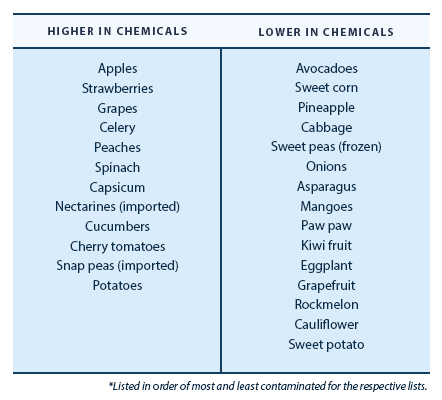
Table 1: Fruits and Vegetables That are Higher and Lower in Chemicals.

Other tips are to buy from local organic farmers markets, buy seasonally when prices are more likely to be comparable to conventional produce; and look into organic food box schemes – these connect local organic farmers with customers direct; cutting out the ‘middle man’ and therefore keeping prices lower.

Does Going Organic Make a Difference?

Actually yes.

Researchers have demonstrated that following an organic diet reduces chemical load, and fast, with an Australian study showing organophosphate pesticide levels decreased by 89% within only seven days in adults following an organic diet (compared to eating conventionally grown food over the same timeframe).

But it’s more than avoiding the pesticides; organic foods are typically also not made with synthetic colourings, preservatives, additives or genetically modified ingredients, so there is a bigger picture.

Don’t Forget to Detox

Another proactive step in reducing any toxic burden you may have built up is to carry out a clinical detoxification program; but don’t buy ‘off the shelf’ – speak to your healthcare Practitioner who can assess your particular needs and who can recommend a program that will support all detoxification pathways, particularly your liver, gut and kidneys. Many of the ingredients used in a Practitioner guided detox programs are potent antioxidants, such as green tea, milk thistle, turmeric and spirulina. Depending on your situation, you may also benefit from using certain phytonutrients ongoing to help improve your resilience against many of the chemicals found in everyday life that are inescapable. These include resveratrol and turmeric.

The Cost of Organic…or Not Going Organic

Deciding whether to go organic or not (based on how much you can afford) may seem to be simply down to the price tag in front of you – but is it? According to Australian Organic there’s more to it, as organic doesn’t cost the earth…quite literally. Certified organic farmers help protect our environment, reducing chemical run-off going into Australian waterways and coastal areas; helping our marine life and aquatic plants. Certified organic meat also has to be free range, and I mean really free range. These animals and birds are able to run on grass under the sun every day…not simply around a bewilderingly vast shed that does have an open door (so is technically ‘free-range’), but which they never actually go out of. So…no sow stalls, no caged chickens, no intensive feed lots, no routine antibiotic use, no electric prodders, no live exports – instead organic farmers focus on allowing their animals to carry out their natural social and physical functions with limited stocking rates (less crowding).

It’s a big topic, so simply know that when you choose to go organic it has a much bigger impact on the world you live in – not just on your health.

References on request


Filed Under: Uncategorized

September 3, 2018 by Luke Leave a Comment

5 Ways You Might Upset Your Gut Microbiome and What to Do About It

‘Microbiome’ is a hot topic right now for anyone interested in health; but you may be wondering what exactly it is? You’ve potentially heard about the good bacteria living within your digestive system, and may have even thought about taking a probiotic to support them. Well it’s this internal community – actually encompassing a massive 38 trillion microbes (not just bacteria) – that are collectively referred to as your commensal microbiome. When healthy and balanced, your microbiome has wide-reaching health effects, such as synthesising important vitamins you need; helping to modulate and boost your immune system; assisting with waste elimination (therefore supporting healthy bowel function); and even influencing your mood.

However, your diet and lifestyle choices can negatively impact the health of your microbiome; resulting in a reduction in both the numbers and/or diversity of the organisms within your gut. Disruption to your internal microbial community can then create an environment where pathogenic (disease causing) organisms have the opportunity to grow and prosper. This state of imbalance is termed ‘dysbiosis’, and can lead to a plethora of negative health effects, including digestive complaints, nutrient deficiencies, or maybe a compromised immune system (which can lead to allergies and/or frequent illness) – these are all common outcomes when the microbiome becomes imbalanced.

The following are five of the most common diet and lifestyle factors that may negatively impact the health of your microbiome, along with some tips to help you re-establish a healthy and thriving microbial community once more.

Five ways you can upset your microbiome:

  1. Eating a low fibre diet: as your gut microbes rely on the fibre in your food for fuel, a low fibre diet leads to a reduction in the diversity of your microbiome.

    Interestingly, evidence now shows those who consume more than 30 different types of plants/vegetables each week have a much more diverse microbiome compared to those who consume 10 or fewer types of plants weekly.

  2. Alcohol intake: the consumption of alcohol can result in dysbiotic changes in your intestinal microbiome, and also triggers gastrointestinal inflammation. If you’re consuming more than one standard drink per day, your microbiome’s probably keen for you to abstain a bit more often!
  3. Unmanaged stress: when you are stressed, the release of the stress hormone cortisol, and adrenaline sensitise your body to inflammation, including gut inflammation. This disrupts the gut environment, compromising the conditions your beneficial microbes need to flourish.
  4. Leading a sedentary lifestyle: lack of exercise has also been linked to reduced microbial diversity in the gut – another reason to get moving!
  5. Antibiotic use: a round of antibiotics does lead to some loss of core commensal organisms (antibiotics are supposed to kill off bacteria however in this instance the good stuff goes too). This leaves the gut susceptible to microbiome imbalances and dysfunction. Due to this disruption, up to 10% of people experience gastrointestinal side effects from antibiotic use, referred to as antibiotic-associated diarrhoea (AAD).

Do any of these situations apply to you? Fortunately, there are a few things you can do to support your microbiome and help correct any imbalance.

Fighting, Fixing and Fuelling

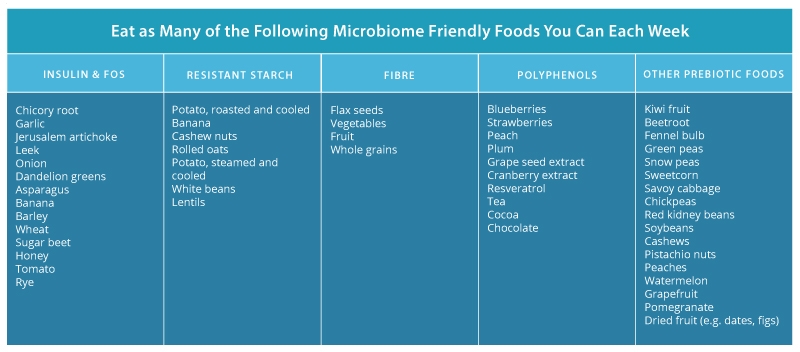
Addressing the five diet and lifestyle factors listed above is important for improving the health and diversity of your microbiome. Managing your stress levels, utilising antibiotics only when specifically needed (and taking stain-specific probiotic to restore your microbiome if you do), moderating your alcohol intake, and regularly exercising will all have your microbiome singing your praises! Additionally, and perhaps most importantly, consuming a diet rich in plant based fibres will provide ample fuel for your beneficial organisms to flourish. See Table 1 below for ideas on foods your microbiome loves.


Table 1: Foods That Feed Your Microbiome

Nevertheless, there are situations where pathogenic organisms have the opportunity to establish within your gut and create dysbiosis, requiring specific natural formulations to address it. In this instance, antimicrobial herbal medicines can be employed, including pomegranate (Punica granatum), nigella (Nigella sativa), and myrrh (Commiphora myrrha).These herbs work to eliminate unwanted organisms within the gut, and have even shown to be as effective as their pharmaceutical counterparts in helping to reduce pathogenic populations in scientific research.

However, while eliminating pathogenic species can begin to address an imbalanced microbiome, this is only one part of the puzzle. You also need to focus on regenerating and rebuilding the diversity of your commensal microbiome, which can be achieved with specific probiotic strains such as:

    • Lactobacillus rhamnosus : one of the most studied probiotic stains in the world, research shows LGG® administration to promote the growth and function of key core commensal bacteria.
    • Saccharomyces cerevisiae (boulardii) (SB): multiple investigations have shown that boulardiireduces antibiotic-associated loss of bacteria, whilst also supporting the rapid restoration of the microbiome after antibiotic use.
    • Lactobacillus acidophilus and Bifidobacterium animalis lactis are two strains also highly indicated to protect and support a healthy microbiome.

So whilst there are factors that can upset your microbiome, be assured there is also a multitude of natural medicines, diet and lifestyle options you can harness to encourage it’s health too, and hence the wellbeing of your whole body. Many of these tips are under your control, but if you feel you need some extra help and support with antimicrobial herbs and/or strain-specific probiotics talk to your healthcare Practitioner about a tailored microbiome-restoring treatment plan to suit your needs. Your beneficial bugs will thank you for it!

Filed Under: Uncategorized

September 3, 2018 by Luke Leave a Comment

Do you know how much sugar your kids eat?

656036-zak-hemmerling-tips-sugar-out-of-fruit-loops-cereal-boxOne of my favorite shorthand ways of telling people how to eat is, “If it comes in a bag or a box, don’t eat it.”


That’s an oversimplification, of course. Some healthy foods, like eggs, do come in boxes—or cartons, at least. But as a general rule, it’s pretty safe.

Unfortunately, most Australians (especially kids) are not following this advice.

In fact, recent studies have shown that the average Australian gets 60 percent of their calories not just from processed food, but from “ultra-processed foods”—which consist of sugar, salt, fats, and oils plus artificial and natural flavors, colors, sweeteners, emulsifiers, and other additives.

One of the many reasons this is problematic is because of excess sugar intake. And this was highlighted in a recent study indicating that most parents significantly underestimate their kids’ sugar intake—primarily because of hidden sugar in processed foods that are commonly seen as “healthy.”

For example, over 90 percent of parents underestimated the amount of sugar in yogurt, by an average of seven cubes, or about 60 percent of the total amount of sugar per serving.

Perhaps not surprisingly, the misjudgments were closely correlated with the children’s body mass index (BMI). In other words, the parents with the largest underestimates of sugar content in foods had kids with the highest BMIs.

The simplest way to avoid this problem is to “just eat real food.” This means cutting out the highly processed and refined foods that have become a mainstay of the Australian diet and focusing on fresh, nutrient-dense, whole foods.

Yes, it can be a difficult transition—especially if your kids are used to eating junk.

But that’s not a reason not to do it. Many parents have gone before you, and there are plenty of resources out there now to make it easier.

With almost 20 percent of kids now obese, we urgently need to bring more attention to how they are eating. And reducing sugar consumption is probably the most important first step.

Filed Under: Uncategorized

July 30, 2018 by Luke Leave a Comment

Are You Sick of Being Sick?

 Are You Sick of Being Sick?

Are you sick of always being sick? Do you ever feel like a sitting duck waiting to be taken down by the latest pathogen doing the office rounds? Or perhaps you’ve tried to remember when the last time was you got through a whole winter season without several bouts of illness? If either of these thoughts have crossed your mind then you need to be getting some immune ‘R n R’; that is – better immune resistance and resilience.

An immune system lacking either can make you susceptible to recurrent bouts of illness. For example, if your immune system is struggling to reclaim it’s vitality after one bout of illness, then you will be susceptible to the next lot of bugs doing the rounds and hence you come down with a secondary infection. This can create the illusion that a particularly horrible virus must be on your tail. However, in this scenario, your dragging symptoms may not be entirely caused by the power of the pathogen in your system, but due to a weakened immune response, unable to resist the invader. As such, that re-appearing tickly throat or glands swelling up again can be a tell-tale sign of your immune system losing ground.

Restoring Resilience Starts With Lifestyle

No one is exempt from the many factors that can hinder your immune system – stress, lack of sleep and the inevitable balancing act of modern day life – all of which deplete our energy, hindering our degree of immune resistance and resilience. Interestingly, even your thoughts can influence your recovery time from an infection, highlighting the importance of developing a healthy mind-set. Nourishing habits to support mental wellbeing include making time to promote relaxation such as meditation, as well as light exercise; both particularly useful in reducing the immunosuppressive effects of an overactive stress response, which can simply be due to a busy life, or actual stressful events. On the other hand, ‘coping’ strategies such as consuming alcohol and smoking do the opposite – increasing your risk of infection and disease. This goes to show that positive lifestyle choices can support your road recovery, and help you break the cycle of recurrent infection.

Eating Your Way to Recovery…and Resilience

Most people are aware that eating a good diet pays dividends, but how well do you actually nourish your body during those times you feel most exhausted and fragile? You’ve potentially heard about the ‘flight and fight’ response, but did you know that the opposite of this phrase is ‘rest and digest’? Real rest is achieved by taking enough time to fully recover when you do become unwell, and acknowledging how you can best meet your needs by ensuring you are resting enough at busy times. Digest refers to the process of assimilating the nutrients from your diet, so healthy digestion is crucial to good health…and good immune function. If you have any digestive issues – speak to your healthcare Practitioner who can help investigate what’s going on.

Some foods offer significant advantages when it comes to a robust immune system. Firstly, warming foods such as crockpot stews and soups save your body time and effort breaking down raw or dense ingredients, leaving you more energy for healing if you become unwell. Secondly, consuming protein-rich foods such as eggs, legumes, nuts, and seeds ensure you have adequate nutritional resources to create new armies of immune cells, to orchestrate the destruction of a pathogenic bugs when you do come into contact with them. Finally, nutrients which are tricky to obtain, either due to low soil levels or dietary restriction, should be bolstered through supplementation where necessary – your Practitioner can help you assess if these are required. Key natural medicines, if you are lacking, ensures your body is adequately supported by the essential nutrients required to promote an active immune response and facilitate better resilience.

Natural Ingredients Have Your Back

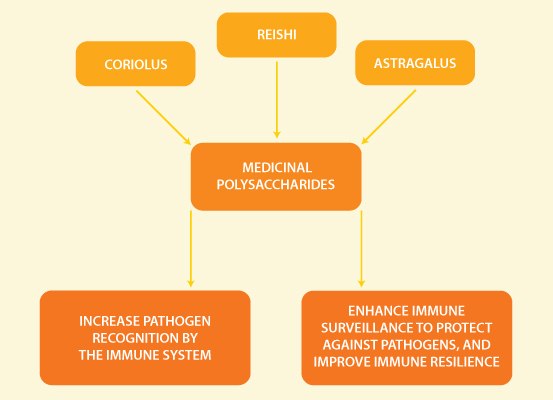
You’ve probably heard there are certain probiotics, herbs and nutrients used to promote good health, but did you know that many of these natural ingredients actually work with your own immune system rather than just being a ‘Band-Aid’ for symptoms? For instance, nutrients such as zinc and vitamin D provide protection against infectious agents by reinforcing the strength of the immune barrier between you and the outside world, namely your gut lining. Furthermore, the immunostimulatory constituents (called polysaccharides) found in certain medicinal mushrooms including Trametes versicolor (coriolus) and Ganoderma lucidum (reishi), as well as in the herb Astragalus membranaceus(astragalus) activate several of the internal agents you need for healthy immune system surveillance and resilience (see Figure 1).

Figure 1: The Immunostimulatory Effects of Medicinal Polysaccharides.

These actions include increasing what’s known as secretory immunoglobulin A on the mucosal surface lining your gut, as well as promoting the activity of immune cells called macrophages (which translates to ‘large eaters’ giving you a picture of what they do to pathogens!) and natural killer cells, whose task is to destroy infection-causing invaders.

Taking a natural medicine approach to your health offers you so many proactive ways to improve your immune resilience in order to prevent ongoing episodes of immune dysfunction…namely illness! By addressing the underlying causes of why you keep getting sick in a holistic way, you can re-write your immune story into one which features resistance and resilience as hero’s and focus instead on enjoying all the things in life you love.


Filed Under: Uncategorized

July 30, 2018 by Luke Leave a Comment

Carb and Fat Combo Makes Food Extra Irresistible

Foods that have both fat and carbohydrates are more rewarding, calorie for calorie, than foods with either energy source alone, according to new research.

Fatty foods like cheese trigger one pathway of signals to reward centers in the brain while carb-loaded foods like grain or a lollipop take another route, says Dana Small, professor of psychiatry at Yale University and senior author of a new paper on the research.

“Our study shows that when the signals are combined they make foods more reinforcing,” Small says.

What makes this finding interesting, says Small, is that foods high in fat and carbohydrate do not exist in nature with only one exception: breast milk.

This makes sense, says Small, since it is important for infants to learn to suckle in order to survive.

“In the modern food environment that is rife with processed foods high in fat and carbohydrate like donuts, French fries, chocolate bars, and potato chips, this reward potentiation may backfire to promote overeating and obesity,” Small says.

Additional coauthors are from Yale and the Max Planck Institute for Metabolism Research in Germany.

The research appears in the journal

Original Study DOI: 10.1016/j.cmet.2018.05.018

Filed Under: Uncategorized

  • « Previous Page
  • 1
  • …
  • 19
  • 20
  • 21
  • 22
  • 23
  • …
  • 65
  • Next Page »

Contact Us

Luke Clarke

Phone: (03) 8820 0010

Clinic Address:
1 Ward Street
Ashburton VIC 3147, Australia
(Parking out the back – use laneway on left)

Menu

  • Home
  • About Me
  • What I Do
    • Functional Medicine
    • IBS (Irritable bowel syndrome) Treatment
    • Fibromyalgia Treatment
    • Gut Microbiome Testing
    • FODMAP
    • Adrenal Fatigue Treatment
    • Women’s Health
    • Men’s Health
  • Children’s Health
  • Blog
  • Contact

Sitemap

Sitemap
Copyright © 2025 · Luke Clarke