Luke Clarke

Functional Medicine Practitioner and Naturopath in Melbourne

Call US: 03 8820 0010
  • Home
  • About Me
  • What I Do
    • Functional Medicine
    • IBS (Irritable bowel syndrome) Treatment
    • Fibromyalgia Treatment
    • Gut Microbiome Testing
    • FODMAP
    • Adrenal Fatigue Treatment
    • Women’s Health
    • Men’s Health
    • Cleanse and Detox
    • Children’s Health
  • Blog
  • Women’s Health
  • Men’s Health
  • Children’s Health
  • Gut Health
    • How Do I Know if I Have Adrenal Fatigue?
    • What Are Functional Foods Examples?
    • What Are the Top Five Functional Foods?
    • What Foods Fight Inflammation?
    • The Health Benefits Of An Anti-Inflammatory Diet
    • What Is an Anti-Inflammatory Diet?
  • Contact

August 9, 2019 by Luke Leave a Comment

10 reasons why you need magnesium

Did you know that magnesium is required by the trillions of cells in your body to carry out hundreds of different processes every day? Magnesium is involved with the metabolism of your foods, hormone production, stress modulation, muscle relaxation, bone health and sleep regulation. So you can see why magnesium is a vital nutrient! With this in mind, it is important you are getting enough to ensure your body can perform these functions. Here are my top 10 reasons you may need a little more of this miracle mineral.

You’re not getting enough

Reason 1: Do you belong to 33% of the Australian population not meeting their minimum daily magnesium requirement?

Recommended dietary intakes (RDIs) for magnesium range from 310 mg/day (females) to 420 mg/day (males), which can easily be obtained from consuming roughly one cup of cooked green vegetables, a handful of nuts, and a raw cacao smoothie. Sounds doable right? Unfortunately, that’s not what everyone is eating, with magnesium deficient refined and processed foods creeping onto people plates. These RDIs also do not take into consideration when your body has an increased demand or is actively deficient in magnesium, meaning you may need even more to meet your needs.

Do you belong to 33% of the Australian population not meeting their minimum daily magnesium requirement?

Reason 2: Even if you are eating a diet predominant in wholefoods, modern agricultural practices have unfortunately depleted the soil from many key minerals including magnesium, again making it harder to meet your RDI for magnesium.

You’re losing too much

Reasons 3, 4 & 5: Coffee and tea contain tannins that can decrease the intestinal absorption magnesium. Additionally, caffeine, as well as alcohol have a diuretic effect, increasing the loss of water and minerals, such as magnesium, via the urine.

Reason 6 & 7: Certain medications (such as antibiotics, diuretics and steroids) can cause moderate to severe depletion in magnesium, as can exercise through urinary excretion and sweat.

Reason 8: Did you know about magnesium’s special relationship with stress? Firstly, having a low level of magnesium is associated with the onset of stressful conditions. However, the activation of the stress response then actually increases the use and elimination of magnesium from the body.

This can result in a vicious cycle: low magnesium causes increased stress, which leads to an increase in the use and excretion of magnesium, leading to lower magnesium levels.


low magnesium causes increased stress, which leads to an increase in the use and excretion of magnesium, leading to lower magnesium levels.

On the bright side, this also means that you can use magnesium therapeutically as both a preventative and treatment of stress.

Reasons 9 & 10: Some of the most common presentations seen by healthcare Practitioners are those of poor sleep and fatigue, with low magnesium playing a causative role in both conditions. This is because magnesium is needed to synthesise the relaxing and sleep-promoting neurotransmitters GABA (gamma-aminobutyric acid) and melatonin, as well as being required to produce the energy your cells need to stay firing throughout the day.

Boost your magnesium levels

If you’re now thinking it’s time to increase your magnesium intake, a supplement can be a great way to top up your diet, support an increase in demand or address a deficiency. To make choosing a magnesium supplement available easier, focus on the two points below so you can make the right decision:

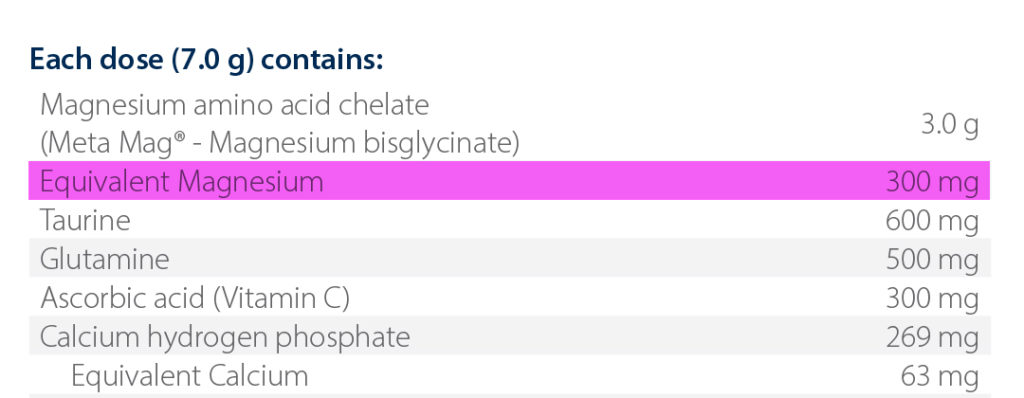
When perusing supplement labels, look for how much elemental equivalent magnesium it contains – 300 mg per dose is an ideal amount.

Dose:

When perusing supplement labels, look for how much elemental or equivalent magnesium it contains – 300 mg per dose is an ideal amount. Talk to your healthcare Practitioner when interpreting supplement labels for further explanation and clarification.
Form:

Not all forms of magnesium are the same, with different types leading to different levels of absorption and tolerability. For example, salt forms of magnesium such as magnesium oxide and magnesium citrate are suboptimal for replenishing magnesium levels, as they can draw water into the bowel and cause diarrhoea. Alternately, amino acid chelate forms, such as magnesium bisglycinate, provide optimal absorption and lower side effects when compared to other forms of magnesium available.

In the instance of magnesium bisglycinate, these superior outcomes are due to magnesium’s chemical bond to the amino acid glycine. Glycine:

  • allows the magnesium to be absorbed via efficient protein channels in the intestine (instead of competitive mineral channels),
  • protects magnesium from binding to things like tannins (ensuring absorption again), and
  • stops drawing water into the bowel (preventing diarrhoea).

Magnesium, the Miracle Mineral

There may be many reasons why you may not be getting enough or may be in need of more magnesium. To learn more about magnesium, speak to your local healthcare Practitioner to find the right magnesium for you.

Filed Under: Uncategorized

July 1, 2019 by Luke Leave a Comment

The Latest Game Changer in Inflammation

Inflammation is the body’s initial response to cell damage and is designed to protect it from infection or further injury. Like day and night, the inflammatory process is a cycle defined by two halves – initiation and resolution.


The initiation phase begins with a local dispatch of immune cells at the site of damage, which sounds the alarm, igniting inflammation within the surrounding tissue. Once the threat of infection or damage is neutralised, the resolution response is activated, calming the initial phase of inflammation and facilitating cellular repair and recovery.

Unresolved Issues

The transition between initiation and resolution is required to complete the cycle of inflammation and to promote healing. However, for some people, this transition fails to occur, leading to a chronic, sustained inflammatory response. This keeps the body in the initiation phase where it cannot resolve inflammation; like a loud alarm system with a broken ‘deactivate’ button. The result? A state of unremitting inflammation that keeps the body in a cycle of tissue damage, preventing recovery.

However, for some people, this transition fails to occur, leading to a chronic, sustained inflammatory response. This keeps the body in the initiation phase where it cannot resolve inflammation; like a loud alarm system with a broken ‘deactivate’ button.

A Remedy for Resolution

If you or someone you know suffers from an inflammatory condition (such as arthritis), you will no doubt be aware of the frustration that comes from persistent symptoms, despite your efforts to find a solution. You may be doing all the right things, taking the right medications, taking steps to improve your diet, exercise and sleep, while proactively managing your stress. However, if the resolution of inflammation is impaired, you will continue to experience symptoms, as the inflammatory response cannot be ‘deactivated’. It’s no wonder that cutting-edge research in the field of inflammation resolution is turning heads, particularly in regards to a group of compounds called specialised pro-resolving mediators (SPMs).

Send in The SPMs

As their name suggests, SPMs trigger or ‘deactivate’ the resolution phase of inflammation in the body, which are produced from omega-3 fatty acids, (EPA) and docosahexaenoic acid (DHA). Like a half-time speech that inspires a triumphant victory, SPMs motivate the immune system to promote resolution. In the initiation phase, white blood cells are known as macrophages actively destroy problem microbes and clear the excess of immune cells released during inflammation. However, in the resolution phase, SPMs reprogram these macrophages, switching their game plan from offence to defence to help regenerate and repair damaged tissue. This results in resolution, relief and recovery.

So why, if the body can produce SPMs, does inflammation remain unresolved? Research tells us that the body’s ability to produce SPMs is lower in conditions involving chronic inflammation,  meaning that in highly inflamed individuals, the ability to resolve inflammation is likely to be impaired. Some pharmacological anti-inflammatories (even some used to treat inflammation) may also prevent SPM activity, as they inhibit inflammation preventing the body’s ability to activate the resolution phase.  This is why supplements providing SPMs are an exciting development for chronic inflammation sufferers; as restoring SPM levels goes beyond the effects of conventional treatments to actively promote resolution and full circle recovery.

This is why supplements providing SPMs are an exciting development for chronic inflammation sufferers; as restoring SPM levels goes beyond the effects of conventional treatments to actively promote resolution and full circle recovery

Viva la Resolution!

Heralding a new era of healing, SPMs offer a beacon of hope for those suffering from chronic inflammation, offering a new solution for achieving resolution! For more information on natural management of inflammation,  contact a Practitioner near you today.

Filed Under: Uncategorized

July 1, 2019 by Luke Leave a Comment

When the Perfect Diet Causes Pain..

 Image result for fodmapsIf you’re reading this, you’re probably interested in building a healthy microbiome by eating all the right foods. Unfortunately, what we find delicious — whether McDonald’s, ice cream, or salami — is often different from what our gut microbes find the most useful. We know which foods can be responsible for creating a healthy environment for our beneficial bacteria — think high fiber, less meat, no artificial sweeteners. The challenge comes when foods we know to be gut healthy actually cause us pain.

For a significant portion of people around the world with digestive sensitivities, there is a class of foods that is healthy for your gut bugs yet cause a slew of uncomfortable symptoms. This class of foods is collectively known as FODMAPs – a mouthful of an acronym that stands for Fermentable Oligosaccharides, Disaccharides, Monosaccharides and Polyols. Though the carbohydrates themselves don’t cause problems, they are easily fermented in the intestines by bacteria that may cause IBS or IBS-like symptoms in sensitive individuals. Healthy foods as varied as apples, pears, asparagus, garlic, beans, or milk, can be the exact trigger for a digestive nightmare.

For a significant portion of people around the world with digestive sensitivities, there is a class of foods that is healthy for your gut bugs yet cause a slew of uncomfortable symptoms. This class of foods is collectively known as FODMAPs

This certainly doesn’t mean that following a low-FODMAP diet means you can’t eat fiber or feed your microbiome well. While you may not be able to tolerate wheat, you can enjoy quinoa; if cauliflower isn’t cutting it, you can substitute with sweet potatoes; if you can’t enjoy store-bought hummus without blowing up like a balloon, it’s pretty easy to make your own, gut-friendly, low-FODMAP version.

Trouble is, it’s hard to determine which foods are triggers for your particular system. To solve this, it is often recommend following a low-FODMAP diet, a strict but temporary diet designed to help you figure out your particular sensitivities.

Trouble is, it’s hard to determine which foods are triggers for your particular system. To solve this, it is often recommend following a low-FODMAP diet, a strict but temporary diet designed to help you figure out your particular sensitivities. Once you identify which foods are giving you trouble, you can feel more confident choosing and enjoying foods that fuel your body and microbiome without causing unnecessary discomfort.

The low-FODMAP diet is designed in three phases.

  • The first phase is an elimination diet in which you temporarily cut out all high FODMAP foods for 2-6 weeks.
  • The second phase of the low-FODMAP diet is the “testing phase”. With guidance, you systematically reintroduce each of the FODMAP categories of foods to determine which food or foods are causing your symptoms.
  • The third phase is the personalization phase, in which you work with your health care professional to come up with a diet that accommodates your tolerances and intolerances. The goal is to have as varied a diet as possible, and not to exclude healthy, high fiber foods without reason.

If your healthy diet is causing you discomfort or pain, that’s a sure sign you should take stock of what is truly healthy for your particular system. With help, you can find the best way to make sure that you – and your microbes – are thriving.

Filed Under: Uncategorized

July 1, 2019 by Luke Leave a Comment

Dry July… Teetotallers Unite!

Has that weekly “cheeky glass of wine” slowly crept its way into your daily routine? If you answered yes, perhaps it’s time to break the cycle and say ‘hasta la vista’ to the booze…at least for the month of July.

The Benefits of Banishing the Booze

Taking a month-long break from alcohol brings with it a multitude of health benefits including:

  • Improved sleep quality: Drinking alcohol negatively affects the sleep stages, including rapid-eye-movement (REM) sleep and deep sleep states, leaving you feeling unrefreshed the following day. Alcohol is also a diuretic, meaning you may wake frequently during the night to use the toilet.
  • Improved energy: Poor sleep quality associated with alcohol can leave you feeling fatigued the following day; much like a real-life walking, talking zombie.
  • Mental clarity: Alcohol interferes with the brain’s communication pathways by slowing down the central nervous system. This disrupts cognitive, mood and behavioural processes, and can leave you feeling ‘foggy’ the next morning.
  • Weight loss. Alcohol is loaded with calories, so cutting down your intake is an easy way to promote weight loss.
  • Healthier skin. The dehydrating effects of alcohol can lead to poor skin texture and wrinkles. Additionally, alcohol is linked to facial redness and flushing, and can exacerbate pre-existing skin conditions.

Give Yo’ Liver a Break

Another benefit of banishing booze is the reprieve it gives your liver. The liver is responsible for detoxifying and eliminating toxins we are all exposed to, including alcohol. Regular intake can burden the liver’s detoxification pathways, which in turn causes inflammation that damages cells, reducing liver function and, in extreme cases can lead to liver disease.

It’s not all bad news, though. The liver is a resilient organ that can benefit greatly from regular detoxification and some extra TLC from antioxidants. As the process of detoxification can create damaging substances before they are eliminated, antioxidants help to protect the body by neutralising these harmful substances. Additionally, antioxidants have potent anti-inflammatory effects, helping to reduce damage caused by harmful substances such as alcohol.

As the process of detoxification can create damaging substances before they are eliminated, antioxidants help to protect the body by neutralising these harmful substances. Additionally, antioxidants have potent anti-inflammatory effects, helping to reduce damage caused by harmful substances such as alcohol.

You Don’t Need to Wait Until Spring to Spring-Clean Your Body

So why not be part of the Dry July movement and, for added benefits, combine it with a detoxification program that incorporates antioxidants. Supporting detoxification and improving the efficiency of toxin elimination can help ‘spring-clean’ your body and kick start your health.

Herbs, nutrients and lifestyle adjustments that can optimise detoxification during your break-up with alcohol include:

  • Sulforaphane: A sulfur-rich compound found in cruciferous vegetables like broccoli, bok choy, and cabbage, it increases antioxidant activity whilst improving your body’s ability to detoxify.
  • Milk thistle: Exerts protective effects on liver cells, preventing cell damage and improving liver function.
  • Turmeric: Has anti-inflammatory actions and can reduce inflammation in the liver caused by alcohol.
  • Water: Increases toxin elimination by flushing toxins through your kidneys to be excreted via the urine.
  • Exercise: Eliminates toxins via the sweat glands through perspiration.
  • Social detox: Take a break from late nights spent partying. This removes the temptation of having a boozy bender.
  • Sleep: Has countless health benefits including supporting your body’s natural detoxification system.

Sober Up and Shape Up

If you feel yourself stuck in a boozy rut, ditch the drink for the month of July and create positive changes to your health and wellness. Adjustments to your drinking habits have been shown to have widespread benefits including improved sleep and energy, mental clarity, and aesthetic benefits such as weight loss and improved skin tone. For those wanting to up the ante and make the most of Dry July, consult with a Natural Health Practitioner about a personalised detoxification approach that can fast track your journey to health.


Filed Under: Uncategorized

June 3, 2019 by Luke Leave a Comment

EMFs: The invisible toxins of our time

Technology has forever changed the world we live in.

From smart phones to solar panels, our lives are infinitely more connected and convenient – thanks to the vast array of gadgets and appliances available at our fingertips. Whilst it’s true that these devices enrich our lives in many ways, mounting evidence warns that our prized possessions could also be double-edged swords providing convenience at the cost of our health.

But why the concern? Beyond the negative impacts on mood and social connection arising from excessive digital technology use, our devices and appliances also emit a low level of radiation, called electromagnetic fields (EMFs). Similar to when a pebble is dropped into still water, EMF’s produce small, radiating waves of energy into their surrounding environment, which have been shown to disturb cellular health.

Similar to when a pebble is dropped into still water, EMF’s produce small, radiating waves of energy into their surrounding environment, which have been shown to disturb cellular health.

So, as our use of technology continues to grow, so too does the concentration of these electromagnetic waves, and the call from health care bodies to establish preventative measures against excessive EMF exposure.

What the EMF?

Preventing excessive exposure to EMFs is important, as in high enough concentrations, exposure can increase the production of reactive oxygen species (ROS). ROS are unstable molecules that cause cellular and DNA damage, which in turn can lead to tissue damage, cellular dysfunction and inflammation. Increased EMF exposure has been linked with the development of tumours, cancer, Alzheimer’s disease and reproductive issues; highlighting how these invisible disturbances can have wide reaching health effects.

This is evidenced by studies that also show 3% of individuals have a severe reaction to EMFs, which manifests symptomatically as sleep disturbances, headaches, fatigue, anxiety and poor concentration that worsen with unmanaged EMF exposure. The same symptoms, with reduced severity, can also be experienced by people exhibiting a mild or moderate reaction to EMFs, however, specific rates of occurrence are yet to be quantified.

It appears that sensitivity to EMFs is influenced by factors such as age, history of exposure, genes that govern detoxification capacity and the stress response, and an individual’s overall health.

Excessive EMF exposure

What then determines if someone will experience EMF-related symptoms? It appears that sensitivity to EMFs is influenced by factors such as age, history of exposure, genes that govern detoxification capacity and the stress response, and an individual’s overall health.  In addition, exposure to increasing concentrations of EMFs elevates the risk of symptoms. Examples of situations that result in higher EMF exposure include:

  • Talking on a mobile phone for more than 30 minutes per day over the last 5+ years without the use of non-wireless headphones;
  • Sleeping near major electrical devices or appliances, including those which share a wall with the bedhead e.g. refrigerator, power box, air-conditioner or Wi-Fi modem;
  • Working in an EMF-heavy environment/occupation i.e. office worker, pilot/flight attendant or electrician;
  • Exposure to multiple medical imaging devices such as X-rays; and
  • Electrocution resulting from occupational exposure or being stuck by lightning.

Based on the above list, what would you estimate your level of EMF exposure to be?

The EMF age

In this modern society, most people are exposed to some level of EMFs, but many don’t link EMFs as a potential cause of their symptoms. Help from a professional who can assess the level of EMFs in your environment, known as a Building Biologist, can provide clarity on your level of exposure. However, beyond this, there are many practical ways you can reduce your EMF exposure, including:

  • Choosing hardwired Ethernet cables instead of wireless networks;
  • Disconnecting household devices/appliances when not in use;
  • Switching devices to ‘flight mode’ overnight;
  • Ensuring your bed is not sharing a wall with a power box, modem or other appliances;
  • Using a hands free function or wired headphones when speaking on your mobile;
  • Storing devices away from you when sleeping, travelling or working to avoid prolonged exposure; and
  • Increasing your antioxidant intake to combat any ROS that are produced with exposure i.e. consuming colourful vegetables, herbs and spices such as ginger, turmeric and rosemary, and increasing zinc, selenium, vitamin C and vitamin E rich foods.

Hi-tech health

With the above in mind, it’s worth taking a moment to consider if the EMFs in your environment could be impacting your health. Perhaps trialling a period of EMF minimisation could help determine if you feel better with reduced EMF exposure? However, despite the widespread use of technology, there are still many ways you can proactively balance your technology use with minimising EMF exposure. By modifying and detoxifying your environment, you can balancing the benefits of a hi-tech life with your highest level of health!

Filed Under: Uncategorized

  • « Previous Page
  • 1
  • …
  • 14
  • 15
  • 16
  • 17
  • 18
  • …
  • 65
  • Next Page »

Contact Us

Luke Clarke

Phone: (03) 8820 0010

Clinic Address:
1 Ward Street
Ashburton VIC 3147, Australia
(Parking out the back – use laneway on left)

Menu

  • Home
  • About Me
  • What I Do
    • Functional Medicine
    • IBS (Irritable bowel syndrome) Treatment
    • Fibromyalgia Treatment
    • Gut Microbiome Testing
    • FODMAP
    • Adrenal Fatigue Treatment
    • Women’s Health
    • Men’s Health
  • Children’s Health
  • Blog
  • Contact

Sitemap

Sitemap
Copyright © 2025 · Luke Clarke