Luke Clarke

Functional Medicine Practitioner and Naturopath in Melbourne

Call US: 03 8820 0010
  • Home
  • About Me
  • What I Do
    • Functional Medicine
    • IBS (Irritable bowel syndrome) Treatment
    • Fibromyalgia Treatment
    • Gut Microbiome Testing
    • FODMAP
    • Adrenal Fatigue Treatment
    • Women’s Health
    • Men’s Health
    • Cleanse and Detox
    • Children’s Health
  • Blog
  • Women’s Health
  • Men’s Health
  • Children’s Health
  • Gut Health
    • How Do I Know if I Have Adrenal Fatigue?
    • What Are Functional Foods Examples?
    • What Are the Top Five Functional Foods?
    • What Foods Fight Inflammation?
    • The Health Benefits Of An Anti-Inflammatory Diet
    • What Is an Anti-Inflammatory Diet?
  • Contact

April 30, 2020 by Luke Leave a Comment

Feeling Blue? 5 Easy Ways to Boost Your Mood

Metagenics Blog Australia and New Zealand

Is life getting you down? Do you feel like miserable moods are holding you back? 

Low moods and unexplained sadness can make life feel like an uphill battle. Feeling blue drains you of energy and motivation, making your usual routine harder to handle. When life’s challenges come your way, such as tight deadlines at work, or conflict in relationships, they can seem impossible to overcome, leaving you feeling overwhelmed and defeated.

While it’s normal to occasionally feel down, persistent low spirits are a sign that something needs to change. The good news is that introducing simple, healthy habits can improve your mood considerably. Although change can be difficult, this list of five easy ways to boost your mood will help you make a solid start on your journey to feeling good again.

The road to a better mood is paved with good nutrition

Research shows that individuals who regularly consume high amounts of healthy, whole foods are less likely to experience low moods. Helpful foods include fruit, vegetables, wholegrains, nuts, fish, olive oil, low fat dairy, and antioxidant compounds (found in colourful fruits and vegetables).

To start feeling brighter, treat yourself to a protein filled breakfast, such as boiled eggs on rye bread, served with a few slices of avocado and a handful of baby spinach. This combination is rich in mood-supporting nutrients, like magnesium and B vitamins (hidden in that delicious rye bread), which your brain uses to produce mood-regulating chemicals like serotonin and dopamine. In fact, magnesium and vitamin B6 are commonly deficient in stressed or depressed individuals, so boosting your intake of these key nutrients can help lift your mood.

Jive, jump or jog your mind to its happy place

Regular exercise supports a healthy mood in many ways, such as:

  • Reducing the negative effects of stress on the brain, which can cause low mood
  • Increasing levels of neurotransmitters that support a healthy mood
  • Improving sleep quality

Start with something that is achievable for your fitness level, such as a 20-minute walk three to four times a week, with some push-ups or jumping jacks. You could also set aside 15 minutes to dance to your favourite music three times a week and work up a sweat that way. Whatever you do, make it enjoyable so it can become a long-term habit!

Feeling Blue? 5 Easy Ways to Boost Your Mood Metagenics Australia and New Zealand Blog

Nourish your gut bacteria

Your digestive tract is home to trillions of microorganisms that benefit your body more than you probably realise. You might have heard that your gut bacteria help digest your food, but did you know they can also affect your mood?

Your gut bacteria send signals to your brain via the vagus nerve, the major nerve that connects your brain with your digestive system. Scientists are still discovering exactly how these signals are able to affect mood, but what we do know is that having a large amount of beneficial bacteria in your gut increases your likelihood of feeling good.

A simple way to boost your levels of good gut bacteria is to eat more fibre, which feeds and fuels them to grow and thrive. Aim for around 20 g of fibre per day, starting with at least two serves of your favourite crunchy vegetables with meals, and snacking on a couple of small handfuls of mixed nuts daily.

If you find that eating more fibre causes uncomfortable digestion (for example, bloating or gas), your gut bacteria may need further support with the help of your natural healthcare Practitioner. Your Practitioner can assess your digestive health and make recommendations that will boost your beneficial bacteria without causing you discomfort.

Feeling Blue? 5 Easy Ways to Boost Your Mood Metagenics Australia and New Zealand Blog

Conquer stress before it conquers you

Although unpleasant, stress is a natural response designed to help you overcome challenges. When your stress response is triggered, your body produces hormones, such as adrenaline and cortisol, which temporarily increase your heart rate and level of mental focus to help you respond to a stressful event.

Once the event has passed, your body dials down its stress response and returns to its formerly relaxed state. However, when stress is unrelenting (due to ongoing work or family conflict, for example) it becomes chronic, with negative consequences for your mood. Chronic stress may make you feel low, irritable, exhausted, or cause insomnia, so managing stress is an important part of improving your mood.

An easy way to benefit both your mood and your stress levels is by taking a magnesium and B vitamin supplement. A combination of magnesium and vitamin B6 has been shown to combat fatigue and nervousness in the face of stress, by raising energy levels and having a calming effect on the brain. In addition, B vitamins have been shown to improve tolerance to stressful situations. While it is important to increase your intake of these nutrients through your diet, taking a supplement will allow you to quickly address deficiencies that may be contributing to your stress and low mood.

Don’t go it alone

If it has been a while since you’ve truly felt like yourself, it might be time to reach out for support. A great place to start is by exploring the resources at Beyond Blue, an organisation dedicated to providing information and support to people struggling with low mood. Additionally, consider an appointment with a natural healthcare Practitioner. Although magnesium and B vitamins are a great place to start, a Naturopath can recommend the nutrients and herbs that are most likely to improve your mood given your individual symptoms and needs. They can also help you manage stress, support your digestive health, and guide you to make healthy changes to your diet and habits.

Navigating through to a brighter mood

Making changes to your diet, lifestyle, gut bacteria levels and stress management can all help improve your mood. In addition, increasing your nutrient intake, especially of magnesium and vitamin B6, is important to support a healthy mood. To start feeling better, visit your natural healthcare Practitioner for a holistic plan that addresses all of these factors.

If symptoms persist, consult your health professional.

Filed Under: Uncategorized

April 6, 2020 by Luke Leave a Comment

Wellbeing Institute Update COVID-19

As the effects of COVID-19 (coronavirus) continue to impact the lives of us all, we want to update you on what we are doing to support you, your health and safety during this difficult time.

Our clinic is following Australian Health Department Guidelines and continues to run as close to normal as possible.

So, yes we are open to take care of your health needs with normal clinic hours, not only with existing health concerns, but with advice on how best support your immune system during this Pandemic.

Phone or Zoom/Skype Consultations

We offer as usual a full in house clinic service at 1 Ward street Ashburton, however if you prefer we also offer Phone and Skype/Zoom consultations.

Waiting Room

We have always done our best to limit your time in the waiting room. We may ask you to wait in your car if anyone else is waiting.

Please come into the clinic by yourself, unless you are under the age of 18 or have a disability and need assistance.

Products

We also offer postal delivery services of products via Australia Express Post. You are also welcome to pick up health products from the clinic.. please ring the order through beforehand and we can have the order waiting for pick up. We are well prepared and well stocked. 

Self Care

This is a stressful time for everyone. Many stress releasing activities such as social gatherings, hobbies, gyms, concerts are temporarily closed. Do what you can to connect with friends and relatives via phone and social media.

Make time for walking in the fresh air, meditation, catching up on reading or other projects that have been put on hold.

I also feel strongly that nutrition plays a big role in not only immune health but in health generally. Maintaining good routines with exercise, sleep, fresh clean meals and appropriate targeted nutrients will go a long way in ensuring we all meet this challenge as best we can. Nutrients like Vit C, D and Zinc along with immune boosting herbs have a big role to play here.

Social distancing is the most effective way to slow the transmission of the virus.  This is important to “flatten the curve” and keep hospitals from becoming overloaded, like they were in China and are currently in parts of Italy.

Thank you for your cooperation as we work to protect the health and safety of our patients, staff and visitors.

Kind regards

Luke Clarke

Filed Under: Uncategorized

April 6, 2020 by Luke Leave a Comment

Simple Daily Habits To Manage Your Anxiety

Simple Daily Habits to Manage Your Anxiety Metagenics Blog Australia and New Zealand

Every year, around one in seven Australians experience anxiety in a way that makes it difficult to cope with daily life. Given the current environment with Covid 19, social distancing and isolation, this figures are likely to be even higher. Ranging in severity from a background level of worry to an overpowering force, anxiety can lead to difficulty sleeping, a racing heart, panic attacks, fatigue, digestive upset, sweating or headaches – interfering with your ability to live your life.

While anxiety can often feel insurmountable, there are several worry-busting habits you can develop to help minimise its effects. Read on to discover our top four habits that can leave you feeling more calm and in control.

Habit #1: Practice being present

Mindfulness is the act of focusing on the present moment, drawing your attention away from mental chatter and anxious thoughts by tuning in to your physical senses (i.e. what is happening in your environment and body).

When you’re in the grip of anxiety, mindfulness may seem impossible. However, a growing body of scientific research shows that practicing mindfulness daily can actually help break the cycle of worry, making it one of the most effective habits for gaining peace of mind.

Here are some tips to make developing a mindfulness practice easier:

  • Start with just five minutes per day, and slowly work your way up to 20 minutes (research has shown that 20 minutes or more provides the greatest benefit for anxiety);
  • Use guided meditations and breathing exercises to keep you focused;
  • Work mindfulness into your daily routine, like meditating on your lunch break; and
  • If anxiety makes it difficult for you to sit still, consider going for a walk. Concentrate on the sights and sounds around you, the feeling of your body moving, and the sensation of the wind on your skin. If you notice your mind wandering, gently bring it back to the present moment.
simple daily habits to manage your anxiety Metagenics Blog Australia and New Zealand

Habit #2: Journal to unjumble your thoughts

Journaling regularly can help you express and understand your anxiety triggers.

By putting your worries down on paper, journaling can help you deconstruct anxious thoughts, examine emotions and situations, or even help you seek solutions to your triggers.

Here are two methods that may be helpful for anxiety:

Exploratory journaling involves 10 to 15 minutes of writing down whatever is on your mind, as fast as you can, without judging yourself. This approach can help you identify thoughts and feelings, including those you may be unaware of, that could be contributing to your anxiety. Seeing them written down on paper can help you ‘fact-check’ anxious thoughts (i.e. consider whether they are accurate), and gain greater clarity about the thoughts and feelings that are making you anxious. This can help you become more aware of your triggers, which is the first step towards managing them.

Action-focused journaling can help you develop an action plan to deal with ongoing situations that trigger your anxiety. Setting aside 10 to 15 minutes for this exercise, begin writing about a problem or situation that contributes to your anxiety (e.g. poor time management). Next, brainstorm some steps you could take to overcome the problem (e.g. creating a schedule), and break these into smaller action items (e.g. set up a calendar to track of your schedule, set reminders to help you stick to it). Lastly, create some realistic goals to help you complete these actions. Monitor your progress on a regular basis, and celebrate any positive changes you’ve experienced since implementing your action plan.

simple daily habits to manage your anxiety Metagenics Blog Australia and New Zealand

Habit #3 – Sweat it out with exercise

Aside from serving as a distraction, exercise has been shown to bump up your brain’s feel-good neurotransmitters – leaving you feeling more relaxed.

Neurotransmitters are messenger molecules made by your brain, that carry signals throughout it, influencing your mood. They also carry messages between your brain and other cells in your body (such as your muscles). Boosting feel-good neurotransmitters can reduce anxiety and relieve muscle tension.

A successful exercise regime can involve any kind of physical activity, such as walking, jogging, swimming, weight lifting or hiking. Essentially, it can be anything that moves your body for at least 2.5 to 5 hours per week. Start by easing yourself in with a few shorter sessions first, and carve out some time in your schedule to make exercise a consistent habit. Asking a friend or family member to join you adds the extra bonus of connecting with loved ones who can help you feel supported as you work to improve your anxiety.

Habit #4 – Tap into the soothing power of natural medicine

For centuries, herbal medicine has been used to help soothe an anxious mind. We now know that many of these herbs work by increasing the activity of a calming neurotransmitter, gamma aminobutyric acid (GABA). This neurotransmitter reduces brain activity, helping you feel less anxious without making you drowsy, and also eases muscle tension.

Botanical combinations that can help you when anxiety kicks in include:

  • Rehmannia and American ginseng, which are both used in traditional herbal medicine to soothe a ‘wired and tired’ (anxious and fatigued) mind. American ginseng also works by increasing the brain’s levels of neurotransmitters, including GABA and serotonin;
  • Zizyphus and Passion flower, which both increase GABA activity and work rapidly to reduce anxiety. This combination also helps to support a restful sleep (without making you feel drowsy the next day); and
  • Kudzu, which may reduce the physical symptoms of anxiety, such as a racing heart, trembling hands and sweating.

In addition, magnesium offers several benefits. It reduces physical tension, and is also required by the body to produce neurotransmitters, such as serotonin. Additionally, magnesium bisglycinate combines magnesium with glycine, allowing you to more quickly and thoroughly absorb the magnesium (compared with other forms of magnesium), bringing you better anxiety-busting benefits. As an added bonus, glycine can also increase feelings of calmness.

Magnesium deficiency is common, especially in stressed and anxious people, so consider a magnesium bisglycinate supplement to make sure you’re getting what you need.

Turn inner calamity into inner calm

When it comes to easing your anxiety, mindfulness, journaling and regular exercise can offer profound benefits. Beyond this, natural medicine in the form of herbs and nutrients can also bring a greater sense of calm. Anxiety can be difficult to manage, so for help finding high quality treatment options that are most likely to help in your particular case, consult a natural healthcare Practitioner. A combination of diet and lifestyle changes alongside a natural medicine will help you manage your anxiety, empowering you to get back to the life you love, naturally.

Filed Under: Uncategorized

March 23, 2020 by Luke 1 Comment

COVID-19 (coronavirus)

As the effects of COVID-19 (coronavirus) continue to impact the lives of us all, we want to update you on what we are doing to support you, your health and safety during this difficult time.

Our clinic is following Australian Health Department Guidelines and continues to run as close to normal as possible.

So, yes we are open to take care of your health needs with normal clinic hours, not only with existing health concerns, but with advice on how best support your immune system during this Pandemic. Given the current climate, this advice may change, however as of today we remain open.

Self Care

This is a stressful time for everyone. Many stress releasing activities such as social gatherings, hobbies, gyms, concerts are temporarily closed. Do what you can to connect with friends and relatives via phone and social media.

Make time for walking in the fresh air, meditation, catching up on reading or other projects that have been put on hold.

I also feel strongly that nutrition plays a big role in not only immune health but in health generally. Maintaining good routines with exercise, sleep, fresh clean meals and appropriate targeted nutrients will go a long way in ensuring we all meet this challenge as best we can. Nutrients like Vit C, D and Zinc along with immune boosting herbs have a big role to play here.

Social distancing is the most effective way to slow the transmission of the virus.  This is important to “flatten the curve” and keep hospitals from becoming overloaded, like they were in China and are currently in parts of Italy.

What you will see

You will see some changes that have been made to protect our patients, practitioners and staff.

  • Posters at the front and back doors reminding patients to stop and read about coronavirus symptoms.
  • A super clean bench at reception which we ask you to avoid touching with bare hands or fingers.
  • Flowers (as usual) in the waiting room.

You will not see

  • Books on the coffee table in the waiting room.
  • Children’s toys.
  • Jugs of filtered water or glasses.

Waiting Room

We have always done our best to limit your time in the waiting room. We may ask you to wait in your car if anyone else is waiting.

Please come into the clinic by yourself, unless you are under the age of 18 or have a disability and need assistance.

Phone or Zoom Consultations

We offer as usual a full in house clinic service at 1 Ward street Ashburton, however if you prefer we also offer Phone and Skype/Zoom consultations. Both Phone and Zoom/ Skype are effective tools in assisting you with your health goals.

Products

We also offer postal delivery services of products via Australia Express Post. We are well prepared and well stocked. 

We understand this is a difficult and confusing time for us all, and encourage our community to remain positive, calm and take the extra precautions necessary to safeguard your health and that of others. We remain committed to doing everything we can to put the health and safety of our community and staff first.

Thank you for your cooperation as we work to protect the health and safety of our patients, staff and visitors.

Please remember this is an evolving situation, which is changing daily.

Kind regards

Luke


Filed Under: Uncategorized

March 12, 2020 by Luke Leave a Comment

Novel CoronaVirus – What You Need To Know

By now, you will have heard about a new, or novel, strain of coronavirus, originally known as novel coronavirus and now called COVID-19. With growing concerns surrounding COVID-19, it is important to remain informed of the facts regarding this viral outbreak. Let’s take a deeper look at the coronavirus and exactly how you can protect yourself and your loved ones.

What is coronavirus?

Coronaviruses are a large family of viruses, seven of which are currently known to infect humans. Four of these strains cause minor symptoms similar to the common cold and two are more severe diseases including Severe Acute Respiratory Syndrome (SARS) and Middle East Respiratory Syndrome (MERS). COVID-19 is the latest strain to have been identified within this family of viruses.

What is novel coronavirus (COVID-19)?

At first, COVID-19 was known as ‘novel coronavirus’, which means a new strain of coronavirus. Once scientists discovered what this strain of coronavirus was and how to identify it in tests, they gave it the name: SARS-CoV-2.3 When someone gets sick with this virus the illness is called COVID-19. For simplicity, the virus and the disease are being referred to by the same name, COVID-19.4

Novel coronavirus (COVID-19) was discovered in 2019 when an unusually high number of people in Wuhan, China, became ill with pneumonia after having an illness similar to the flu. When doctors tested them, they found these people had a type of coronavirus they hadn’t seen before.

Why is it spreading so quickly? 

The reason COVID-19 is spreading so quickly is simply that it is a new virus the body does not recognise, and as such has little defence against. To explain this further, viruses are proposed to evolve via two mechanisms:

  • Antigenic drift: Occurs when small changes (or mutations) in viral genes lead to changes in the surface proteins of the virus, known as hemagglutinin (HA) and neuraminidase (NA).
  • Antigenic shift: Occurs when a major change in viral genes creates new HA and/or new NA proteins, resulting in a new virus subtype. Antigenic shift is theorised to occur when a virus from an animal population gains the ability to infect humans — a proposed mechanism behind the origin of COVID-19, which has been linked to a live animal market.6

As a result of this antigenic shift, the body’s immune system may not recognise the surface proteins of the evolved virus, resulting in increased susceptibility to infection. This viral evolution may account for COVID-19’s increased virulence, as this novel virus represents a newly identified pathogen with no known pre-existing immunity in humans.

How is it spreading?

Transmission of COVID-19 occurs when infected droplets are distributed via human-to-human contact, usually when a sick person coughs or sneezes. It may also be spread via contact with contaminated objects as human coronaviruses can remain infectious on inanimate surfaces for up to 9 days.7 Airborne spread has not been reported for COVID-19 and it is not believed to be a major driver of transmission.8 

What are the symptoms of coronavirus?

Symptom severity of COVID-19 varies, with mixed reports of severe flu-like symptoms in addition to milder presentations. Primary symptoms to be aware of include:

  • Fever, cough and shortness of breath/breathing difficulties.

Affected individuals may also experience additional flu-like symptoms including:

Headache, muscular stiffness and pain, loss of appetite, malaise/extreme generalised fatigue, chills, confusion, dizziness, rash, night sweats, and gastrointestinal upset

Who is most at risk?

Individuals at highest risk for severe disease include people aged over 60 years and those with underlying medical conditions.9 Susceptible individuals include:

  • The elderly
  • Immunocompromised individuals
  • People with serious or chronic medical conditions including heart disease, diabetes and lung disease
  • People who have recently travelled to mainland China, South Korea, Iran and Italy

Individuals in close contact with a confirmed case of coronavirus, particularly during the infectious period

To put this in context…

Media outlets have focused their attention on the spread of COVID-19 and associated fatalities, contributing to alarm and unrest within the Australian community. While you should remain informed on the progression of this outbreak, you should not be alarmed, as the Australian Government is adequately addressing COVID-19 via the ‘Coronavirus Emergency Response Plan’. This scheme involves preventative measures during the early stages of the outbreak, including mechanisms for early detection and effective management of cases and contacts, and has likely contributed to current low incidences of COVID-19 within Australia.

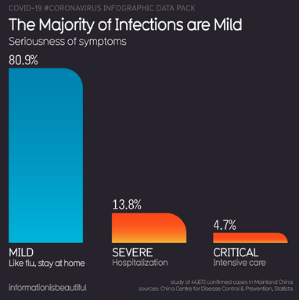
Despite reports of more than 117,000 confirmed cases of COVID-19 worldwide, only 112 cases have originated within Australia.10,11 Further to this, the case fatality rate is approximately 3.6% of confirmed cases reported globally, with an estimated 80% of laboratory confirmed patients experiencing only mild to moderate symptoms followed by recovery (Figure 1).12 Additionally, disease in children appears to be relatively rare. Approximately 2.4% of the total cases reported involved individuals aged under 19 years, with a very small proportion of those developing severe (2.5%) or critical disease (0.2%).13

Comparisons between COVID-19 and common influenza viruses also provide context regarding population impact, with influenza estimated to have affected one billion individuals and caused anywhere between 291,000 to 646,000 deaths worldwide.15

How you can protect yourself from coronavirus

As COVID-19 is a novel virus, there is no vaccine currently available. However, practising good hand and sneeze/cough hygiene provides the best defence against viral infections. These include:

  • Washing your hands frequently with soap and water, before and after eating, and after going to the toilet.
  • Covering your mouth and nose when coughing and sneezing, immediately disposing of tissues and using alcohol-based hand sanitiser.
  • If unwell, seek immediate guidance from a medical professional. You may be advised to isolate yourself from the general population for up to 14 days to stop viral spread.

The onset and severity of infection in response to viral pathogens is greatly influenced by the virulence of the pathogen and the host’s immune defences (Figure 1). While little can be done regarding the virulence of COVID-19, improving an individual’s immune response is the most effective strategy to protect against any pathogen.

Immune-enhancing ingredients that may be of assistance

Active hexose correlated compound (AHCC™)

AHCC™ is a proprietary enzyme-fermented extract of shiitake that contains a mixture of polysaccharides, amino acids, lipids, and minerals. AHCC™ has been used in over 20 human clinical trials, with results demonstrating enhanced dendritic cell populations,16 increased cytokine expression of CD4+ and CD8+ T lymphocytes17 and improved antibody synthesis in elderly patients to the influenza B virus.18 AHCC™ has also demonstrated efficacy for numerous viral infectious diseases including West Nile virus, influenza virus, hepatitis virus, and human papillomavirus (HPV), demonstrating activation and modulation of host immune cells such as NK (natural killer) cells, NK T cells and gamma delta T cells.

AHCC™ is currently being distributed to the medical community treating COVID-19-infected patients in the Wuhan region of China (Wuhan Zhongshan hospital and Leishenshan hospital). Although data is yet to be published on the efficacy, as evidenced by clinical trials, AHCC™ is expected to enhance immune function of these healthcare workers, facilitating the prevention and clearance of viral pathogens that they may be exposed to.

Andrographis paniculata (andrographis)

Andrographis has extensive evidence in reducing the incidence, severity and duration of acute respiratory infections, as evidenced by positive results in a meta-analysis, which included 33 studies.19 In particular, andrographis has been shown to stimulate both the antigen-specific and non-specific immune response, as well as increase NK cell activity, antibody-dependent cellular cytotoxicity and antibody-dependent complement-mediated cytotoxicity,20 thereby supporting host immune defences.

Zinc

Zinc is particularly critical for the intracellular signalling pathways in both innate and adaptive immunity25 and is essential for the development of non-specific immunity, such as neutrophils and NK cells, and stimulating the development of acquired immunity.26

Vitamin C

Vitamin C supplementation has been shown to reduce the duration and severity of colds27 and is increasingly efficacious when combined with zinc. Vitamin C stimulates white blood cell production and function, enhances NK cell activity and chemotaxis, supports clearance of spent neutrophils from sites of infection, increases serum levels of antibodies, and augments lymphocyte differentiation and proliferation, thereby facilitating innate and adaptive immune responses.28

Vitamin D

It is well known that vitamin D plays an important role in regulating immune function, with deficiency impacting the activity of T regulatory (Treg) cells,29,30 as well as the production of antibodies.31 Additionally, vitamin D enhances the adaptive immune response by increasing the differentiation of monocytes to macrophages and stimulating white blood cell proliferation, essential to the neutralisation or viral infections.32

Medicinal Mushrooms

Japanese mushrooms, including Cordyceps sinensis (cordyceps), Trametes versicolor (coriolus), Ganoderma lucidum (reishi) and Lentinula edodes (shiitake) enhance the body’s immune response and provide antiviral actions. Specifically, these mushrooms activate the innate immune system, triggering the production of NK cells, lymphocytes, neutrophils, macrophages, and inflammatory cytokines.33 Cytokine synthesis prompts adaptive immune processes to take effect, through the promotion of B cells for antibody production, and stimulation of T cells, which mediate cellular and humoral immunity.34

Strain specific probiotics

Strain specific probiotics, with proven human health benefits, are useful to boost and regulate immunity. Studies have demonstrated Lactobacillus plantarum (HEAL9), Lactobacillus paracasei (8700:2) and Lactobacillus rhamnosus (LGG®) all have the capacity to induce interleukin-10, a key anti-inflammatory and immunoregulatory cytokine, which is expressed by Tregs and T helper 2 cells.35 Animal studies have shown LGG® protects against influenza by stimulating respiratory NK cell activity, and upregulating antiviral interferon gamma (IFN-γ).36,37 L. plantarum (HEAL9) and L. paracasei (8700:2) have also been shown to stimulate innate immune responses.38

What to do if you develop symptoms

If you do develop symptoms associated with COVID-19, including fever, cough, sore throat, tiredness or shortness of breath, seek immediate guidance from a medical professional. You may be advised to isolate yourself from the general population to stop viral spread.

Individuals who have recently travelled to an international high-risk area or who have recently been in contact with a confirmed case are at an increased risk of developing COVID-19 and are advised to contact a medical professional for assistance.

For further resources and guidelines on COVID-19 management:

Australian Government Department of Health: COVID-19

https://www.health.gov.au/health-topics/novel-coronavirus-2019-ncov

World Health Organisation Coronavirus Disease (COVID-19) Outbreak

https://www.who.int/emergencies/diseases/novel-coronavirus-2019

Centre for Disease Control and Prevention: Corona Disease 2019 (COVID-19)

https://www.cdc.gov/coronavirus/2019-ncov/about/


*References available on request

Filed Under: Uncategorized

  • « Previous Page
  • 1
  • …
  • 10
  • 11
  • 12
  • 13
  • 14
  • …
  • 65
  • Next Page »

Contact Us

Luke Clarke

Phone: (03) 8820 0010

Clinic Address:
1 Ward Street
Ashburton VIC 3147, Australia
(Parking out the back – use laneway on left)

Menu

  • Home
  • About Me
  • What I Do
    • Functional Medicine
    • IBS (Irritable bowel syndrome) Treatment
    • Fibromyalgia Treatment
    • Gut Microbiome Testing
    • FODMAP
    • Adrenal Fatigue Treatment
    • Women’s Health
    • Men’s Health
  • Children’s Health
  • Blog
  • Contact

Sitemap

Sitemap
Copyright © 2025 · Luke Clarke